When you log into Vahika, you’ll instantly access a streamlined dashboard with real-time updates on shipments, fleet status, and pending tasks. You can set up detailed logistics and fleet profiles, assign drivers, and organize vehicles by service types. Efficient route planning and dynamic rerouting cut travel time and costs, while real-time tracking guarantees smooth fleet and shipment monitoring. Plus, automated alerts keep communication seamless. Explore further to master optimizing your logistics operations strategically.
Key Takeaways
- Vahika login provides quick access to a dashboard with real-time shipment, fleet status, and task updates.
- Users can set up detailed logistics and fleet profiles including vehicle specifics and driver assignments.
- The platform offers route optimization tools that reduce travel time, fuel costs, and unnecessary mileage.
- Real-time fleet tracking features include shipment status, vehicle health monitoring, and geo-fencing alerts.
- Vahika enhances operational efficiency by streamlining communication, dynamic rerouting, and data-driven decision-making.
Logging Into Vahika and Navigating the Dashboard

Anyone logging into Vahika will find a streamlined process designed for efficiency. When you enter your credentials on the vahika login page, the system quickly verifies your details, minimizing wait time. Once inside, the dashboard presents a clear, organized layout that prioritizes your key logistics metrics. You’ll see real-time updates on shipments, fleet status, and pending tasks right upfront. Navigation is intuitive, letting you access different modules without hassle. You can customize widgets to focus on the data most relevant to your operation. This strategic design guarantees you stay informed and make decisions fast. By mastering the vahika login and dashboard navigation, you set the stage for smooth logistics management and proactive business oversight. Understanding the Exposure Triangle can also enhance your ability to capture key visuals for reporting and analysis.
Setting Up Your Logistics and Fleet Profiles
Before you can optimize your logistics operations, you need to set up your logistics and fleet profiles accurately. Begin by entering your company’s key details—name, contact info, and operational zones—to guarantee smooth identification and communication. Next, add vehicle specifics such as type, capacity, registration numbers, and maintenance schedules. This helps you track fleet availability and condition efficiently. Don’t forget to assign drivers and link them to their respective vehicles, including their licenses and certifications. Use Vahika’s interface to categorize your fleet based on service types or routes, enabling tailored management. Double-check all inputs for accuracy, as this data forms the foundation for streamlined operations. Proper setup prevents errors and supports informed decision-making throughout your logistics management process. Additionally, understanding your key features to consider when selecting vehicles can enhance operational efficiency and performance.
Managing Delivery Schedules and Optimizing Routes
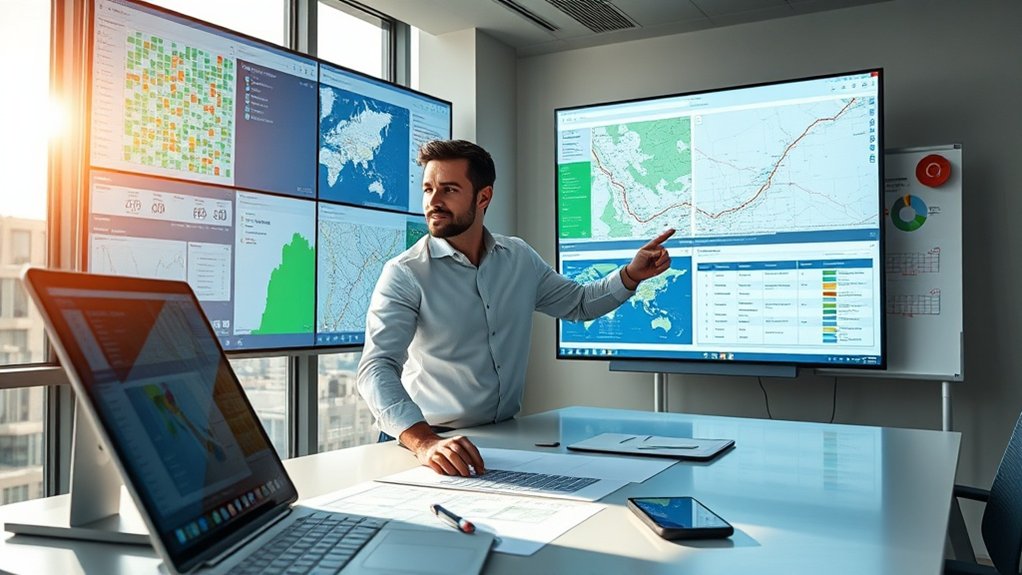
You need to plan routes efficiently to cut down travel time and fuel costs. Use real-time schedule tracking to stay updated on delivery progress and adjust plans on the fly. Prioritizing delivery time optimization guarantees you meet deadlines and improve customer satisfaction. Additionally, understanding the Exposure Triangle can help in making informed decisions about resource allocation and operational efficiency.
Efficient Route Planning
Although managing delivery schedules can be complex, efficient route planning guarantees you minimize travel time and fuel costs while meeting customer deadlines. You should analyze delivery locations, traffic patterns, and vehicle capacity to craft ideal routes. Leveraging route optimization tools helps you reduce unnecessary mileage and balance workload among drivers.
| Route Segment | Distance (km) | Estimated Time (min) |
|---|---|---|
| Warehouse to Zone A | 12 | 20 |
| Zone A to Zone B | 8 | 15 |
| Zone B to Zone C | 15 | 25 |
| Zone C to Warehouse | 10 | 18 |
| Total | 45 | 78 |
Real-Time Schedule Tracking
Efficient route planning sets the foundation, but real-time schedule tracking keeps your deliveries on course when unexpected changes arise. You gain instant visibility into your fleet’s progress, allowing you to swiftly adjust schedules and reroute vehicles as needed. This proactive approach minimizes delays and maximizes resource use. Focus on these key elements:
- Live Updates: Monitor vehicle locations and delivery status continuously to respond immediately to traffic, weather, or operational issues.
- Dynamic Rerouting: Use real-time data to optimize routes on the fly, avoiding bottlenecks and ensuring timely arrivals.
- Communication Integration: Keep drivers and dispatchers connected to quickly implement changes and confirm schedule adherence.
Delivery Time Optimization
When managing delivery schedules, optimizing routes plays an essential role in reducing transit times and cutting costs. You should leverage data-driven tools to analyze traffic patterns, distance, and delivery windows, ensuring each route maximizes efficiency. Prioritize high-demand areas and time-sensitive deliveries while minimizing backtracking. Incorporate real-time updates to adjust routes dynamically in response to delays or new orders. Additionally, grouping deliveries geographically reduces fuel consumption and driver fatigue. Use software that integrates with your fleet management system to automate route planning and monitor performance continuously. By focusing on these strategies, you’ll not only improve on-time delivery rates but also enhance customer satisfaction and lower operational expenses. Efficient delivery time optimization transforms your logistics operations into a competitive advantage.
Tracking Your Fleet and Shipments Efficiently

You need real-time fleet monitoring to stay ahead of delays and disruptions. Tracking shipment status updates lets you provide accurate ETAs and improve customer satisfaction. Applying route optimization techniques guarantees your vehicles take the most efficient paths, saving time and fuel. Additionally, utilizing wide-angle lenses for capturing your fleet in action can enhance marketing materials and social media presence.
Real-Time Fleet Monitoring
Here’s how to leverage real-time monitoring effectively:
- Monitor vehicle health: Detect maintenance needs early to prevent breakdowns and costly repairs.
- Track driver behavior: Guarantee safety and compliance by analyzing speed, braking, and idling patterns.
- Manage fuel consumption: Identify inefficiencies and reduce costs by monitoring fuel usage in real time.
Using these strategies, you’ll keep your fleet running smoothly, improve service reliability, and maintain control over logistics operations with precision.
Shipment Status Updates
Building on real-time fleet monitoring, keeping shipment status updates accurate and timely plays an essential role in logistics management. You need to guarantee every shipment’s location, condition, and estimated delivery time are consistently reported. This transparency lets you proactively address delays or issues, minimizing customer dissatisfaction. Utilize automated alerts and integrate tracking data directly into your system via Vahika Login to maintain seamless communication. By monitoring shipment milestones—loading, transit, unloading—you can pinpoint bottlenecks and improve operational efficiency. Precise updates also support inventory management and billing accuracy. Staying on top of shipment status empowers you to make informed decisions, enhancing overall service reliability and client trust without waiting for manual reports or guesswork.
Route Optimization Techniques
Anyone managing logistics knows that route optimization is essential for tracking fleets and shipments efficiently. Optimizing routes minimizes delays, reduces fuel costs, and improves delivery accuracy. To enhance your tracking and fleet management, focus on these key techniques:
- Leverage Real-Time Traffic Data: Use live updates to avoid congestion and reroute vehicles dynamically.
- Implement Geo-Fencing: Set virtual boundaries to monitor vehicle locations and receive alerts when shipments enter or leave designated zones.
- Utilize Advanced Algorithms: Apply route optimization software that factors in delivery windows, vehicle capacity, and driver schedules for the most efficient paths.
Streamlining Communication With Drivers and Clients
Effective communication with drivers and clients hinges on using the right tools to guarantee real-time updates and clear instructions. You should leverage integrated messaging platforms within Vahika Login to send instant notifications, reducing delays and misunderstandings. Establish standardized communication protocols, ensuring drivers receive route changes, delivery details, and safety alerts promptly. For clients, provide transparent shipment tracking and timely status reports to build trust and satisfaction. Use automated alerts for critical events like delays or completed deliveries to keep everyone informed without manual follow-ups. Prioritize two-way communication channels to quickly address issues or feedback, enhancing responsiveness. By streamlining these interactions, you minimize operational disruptions, improve coordination, and foster stronger relationships with both drivers and clients, ultimately boosting your logistics efficiency and service quality. Additionally, consider implementing strategies from the exposure triangle to optimize visual communication in your updates, ensuring clarity and engagement.
Analyzing Fleet Performance and Reports
When you analyze fleet performance and reports, you gain critical insights that drive smarter decisions and operational improvements. This process helps you pinpoint inefficiencies, optimize routes, and reduce costs. By regularly reviewing thorough data, you can proactively address issues before they escalate.
Focus on these three key areas:
- Vehicle Utilization: Track mileage, idle time, and maintenance schedules to maximize asset efficiency.
- Driver Performance: Monitor behaviors like speed, braking, and adherence to schedules to guarantee safety and reliability.
- Operational Costs: Analyze fuel consumption, repair expenses, and downtime to identify savings opportunities. Additionally, understanding vehicle utilization metrics can further enhance your approach to fleet management.
Frequently Asked Questions
How Secure Is My Data on Vahika?
Your data on Vahika is secured with advanced encryption and strict access controls. The platform regularly updates its security protocols, ensuring your information stays protected from unauthorized access and cyber threats, giving you peace of mind.
Can Vahika Integrate With Other Software Tools?
When a fleet manager integrated Vahika with their ERP system, they streamlined operations seamlessly. You can easily connect Vahika with various software tools via APIs, enhancing data flow, automation, and overall efficiency in your logistics workflows.
What Customer Support Options Does Vahika Offer?
Vahika offers 24/7 customer support via phone, email, and live chat. You’ll also find an extensive knowledge base and video tutorials to resolve issues quickly and keep your operations running smoothly without delays.
Is There a Mobile App for Vahika?
Yes, Vahika offers a mobile app that lets you manage logistics and fleet operations on the go. You’ll get real-time updates, track vehicles, and handle tasks efficiently, ensuring smooth business management anytime, anywhere.
How Do I Upgrade My Vahika Subscription Plan?
You can upgrade your Vahika subscription by logging into your account, browsing to the subscription section, selecting the desired plan, and confirming the payment. If needed, contact support for personalized assistance or billing questions.